Gwangjang Market price-gouging crackdown: what changes for foreign visitors in 2026
Gwangjang Market — Seoul's most-Instagrammed traditional food market — is back in the news for the wrong reason. In mid-April (clips surfaced around April 16), a stall there charged a foreign visitor ₩2,000 for a single 500ml bottle of water. When pressed, the vendor reportedly said it was "because there are so many foreigners." The merchant association issued a 3-day shutdown of the stall.
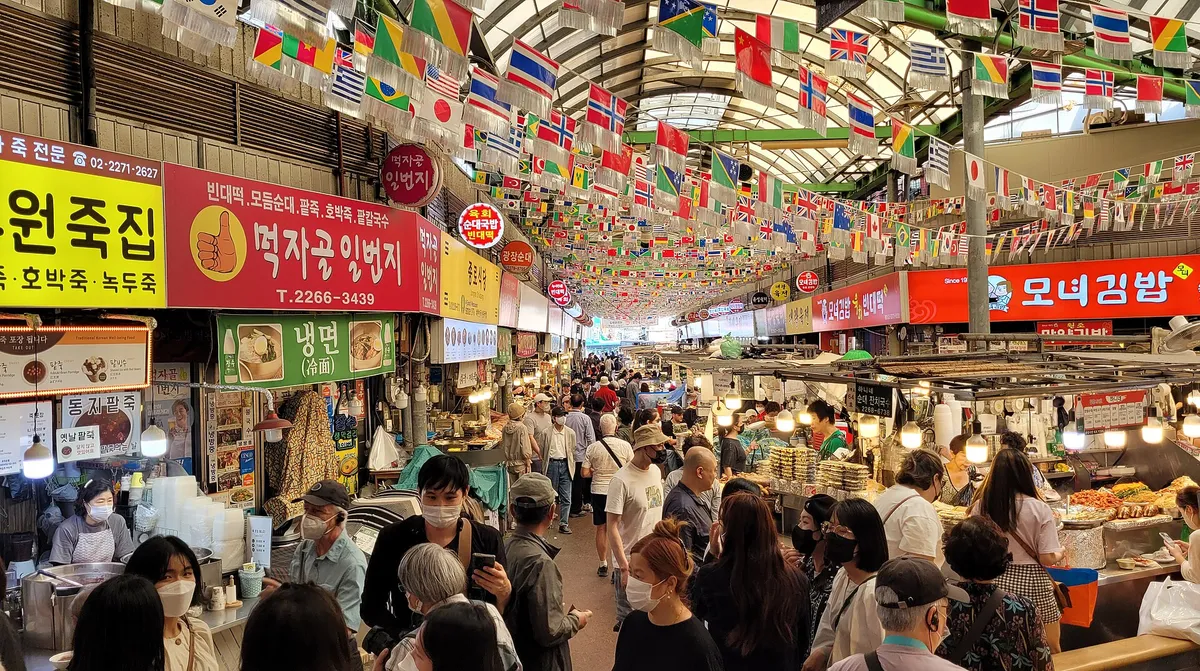
It's not a one-off. Newsis reported foreign visitors describing "unfriendly service and pressured upselling of expensive menu items" on follow-up visits. So Korean authorities — both the Jongno district office and the central Ministry of SMEs and Startups — have finally moved past statements and rolled out a reform package for traditional markets in 2026 — and the changes do meaningfully shift what foreign visitors should expect.
What's actually changing in 2026
- Mandatory price displays — including for stalls and street vendors. No more "ask first, get charged later."
- Real-name vendor registry (Jongno-gu) — every stall operator must be officially registered, breaking the anonymity that protected repeat offenders.
- Mystery shoppers (미스터리쇼퍼) — government-deployed undercover inspectors making rotating visits to high-tourist markets.
- Mandatory hospitality + hygiene training for vendor association members.
- Fair-price registration system (자율요금 사전신고제) — vendors pre-declare seasonal pricing; surprise hikes count as violations.
- Consequences with teeth — confirmed offenders are removed from Onnuri Gift Card and regional gift card networks (a major revenue stream for traditional vendors).
The Ministry of SMEs and Startups held an on-site meeting at Gwangjang on May 5, framing the reforms as "trust restoration" rather than mere punishment. Whether the changes hold long-term depends on enforcement, but the toolkit on paper is the most aggressive in years.
What foreign visitors should still do
- Always check posted prices before ordering. If a stall has no visible price list, don't sit. Walk to the next one — Gwangjang has hundreds.
- Ask "free?" before eating any side dish or "service" item brought without asking.
- Photograph the menu / posted price before ordering. Useful if the bill comes back different.
- If you've been overcharged: get the receipt and call 1330 — Korea Tourism's free 24/7 hotline (English available). They mediate directly with the merchant. The Seoul Tourism Organization also offers free legal aid for tourist disputes.
- Don't suffer it silently. Korean police take tourist scam reports seriously, and the new mystery-shopper program needs real-world data to function.
The honest take
Gwangjang is still worth visiting — the bindaetteok (mung-bean pancakes), yukhoe (raw beef), and mayak gimbap (mini seaweed rice rolls) are genuinely excellent at most stalls. The bad apples are a small minority loud enough to dominate headlines. The 2026 reforms exist because Korea has finally decided that "the foreigners are noisy about it" is a feature, not a bug. Show up informed, push back politely if something feels off, and use 1330 if you need to. The market is being watched now — including by foreign-language-speaking inspectors.
- MBC News Today (₩2,000 water at Gwangjang Market, May 2026)
- Seoul Shinmun (3-day shutdown of the offending stall)
- Seoul Economic Daily (Government's pricing reform package)
- YTN ("Because there are many foreigners" — vendor's response)